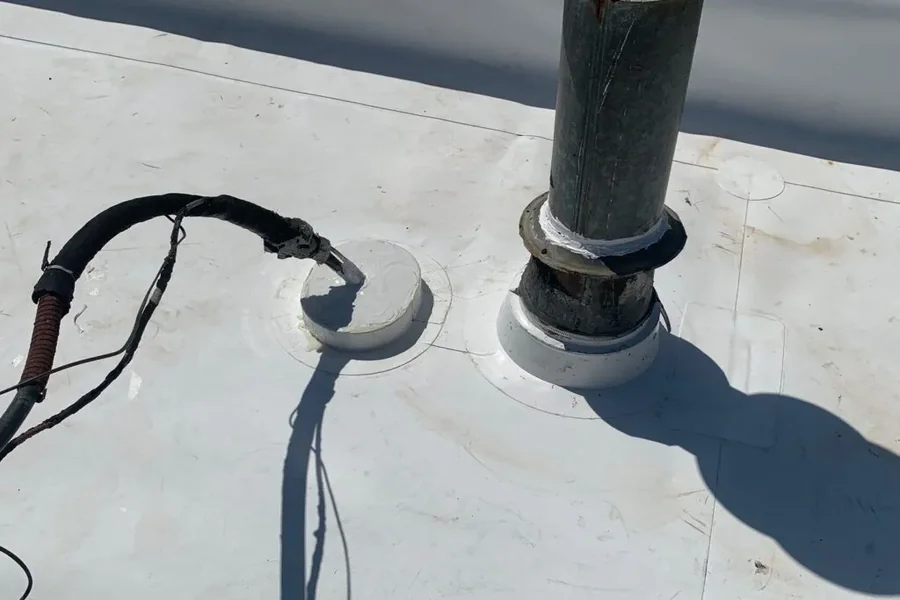
If you have ever spent a rainy afternoon watching a mysterious drip hit your warehouse floor, you know the frustration of a roof leak that just won’t quit. Commercial roofing systems are full of complex details, but few cause as much trouble as the pitch pan. Most property owners don’t even know what they are looking at until a roof repair layton inspector points out that this small metal box is the reason for their mounting repair bills. It is a classic case of a small component causing a massive headache when the installation isn’t handled with care.
The Anatomy of a Pitch Pan
A pitch pan is essentially a flanged metal box installed around structural penetrations like I-beams, conduits, or pipes that stick out of your roof. Because these shapes are often irregular, you cannot simply wrap them in standard flashing. Instead, the box is placed around the base of the pipe and filled with a pourable sealer. In the old days, we used actual pitch or coal tar, which gave the component its name. Today, we mostly use high-tech urethane sealants or specialized “pourable sealer” pockets.
The idea is that the liquid sealer flows into every nook and cranny around the penetration, creating a solid, waterproof plug. When done right, it is a brilliant solution for difficult spots. However, the reliance on a liquid filler means that the entire system is only as good as the chemical bond and the person pouring it.
Why the Seal Fails Over Time
The biggest enemy of a pitch pan is the sun. Most pourable sealers are exposed directly to UV rays, which eventually causes the material to dry out, shrink, and crack. When the sealer shrinks, it pulls away from the edges of the metal pan or the side of the pipe. This creates a tiny gap that acts like a funnel for rainwater.
Temperature changes also play a huge role. Your roof gets incredibly hot during the day and cools down at night. The metal pipe, the metal pan, and the sealant all expand and contract at different rates. If the sealer isn’t flexible enough to handle that movement, it will tear. Once that bond is broken, moisture finds a direct path down into the building envelope. It does not take a massive hole to cause a problem. A hairline fracture is more than enough to let gravity do its work.
The Problem with Improper Filling
You would be surprised how often these pans are not filled correctly from the start. A common mistake is not filling the pan all the way to the top. If the sealer is recessed, the pan turns into a tiny swimming pool every time it rains. Standing water sits on top of the sealant, putting constant hydrostatic pressure on the seals. Over time, that water will find a way through.
The sealer should always be “mounded” or sloped. This means the installer adds enough material so that it crowns in the center, allowing water to shed off the sides and onto the roof membrane. If your pitch pans look like little bowls instead of little hills, you are looking at a ticking time clock for a leak.
Compatibility and Contamination Issues
Another human error that leads to recurring moisture is poor surface preparation. If the metal pipe is rusty or covered in old grease, the new sealer will not stick. It might look fine for a week or two, but eventually, it will peel away.
We also see issues where the wrong type of sealer is used for the roof membrane. For example, using a petroleum-based filler on certain types of rubber roofing can actually eat away at the material. This turns a simple maintenance item into a structural disaster. Professional installers have to ensure that every chemical involved plays nice with the others, or the whole system fails within a single season.
How to Stop the Cycle of Leaks
If you find yourself constantly patching the same spot, it is time to stop adding more “goop” on top of the old sealer. The right way to fix a failing pitch pan is to clean it out, prime the surfaces, and use a high-quality, UV-stable pourable sealer. In some cases, adding a “rain hood” or an umbrella-like flashing over the top of the pan can double its lifespan by keeping the sun and direct rain off the sealant altogether.
Regular inspections are the only way to catch these issues before the insulation under your roof gets soaked. Once that insulation is wet, it loses its R-value and can even lead to mold growth or deck rot.
Final Word
Dealing with recurring leaks is a drain on your time and your budget. Most of these issues stem from small details that were overlooked during the initial build or a previous botched fix. If you suspect your flashing is failing, reaching out to a roof repair layton inspector can help you identify if a pitch pan is the true culprit. Taking care of these small metal pockets today will save you from a full roof replacement tomorrow.