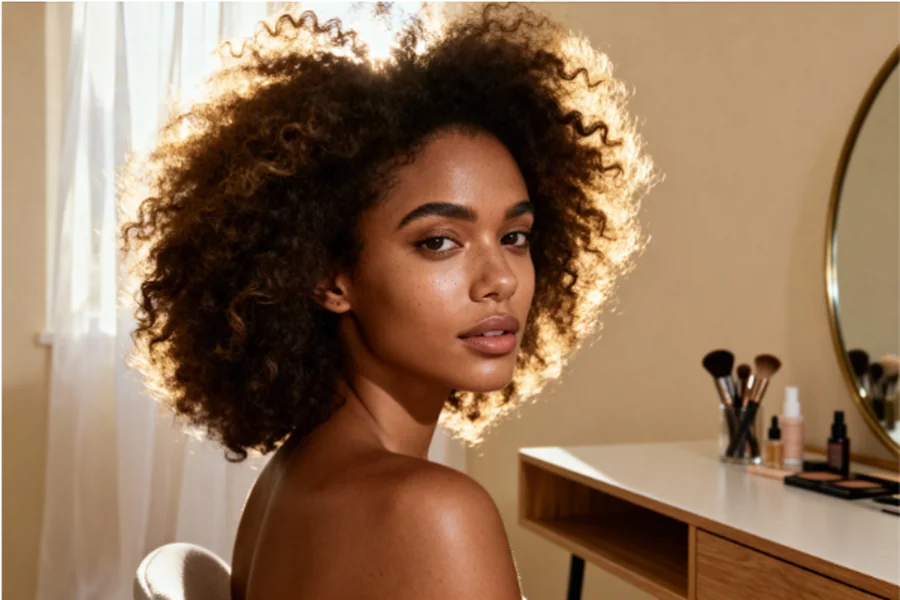
Within the realm of natural curls and textured styling, the Afro hairstyle stands as an iconic structure, defined by its balance of volume, moisture retention, and overall fullness. Many consumers seeking suitable styling solutions also reference product selections from brands like Luvme Hair. If you’re considering new care or styling tools, a 30% discount hint is hidden within this article—continue reading to uncover the details.
Maintain Soft, Hydrated, and Manageable Strands
During Afro hairstyle creation, foundational preparation determines the overall shaping outcome. Many readers, particularly those interested in wigs for black women over 50, emphasize the importance of hair care routines for maintaining healthy styles. Regardless of length or texture, achieving optimal moisture levels before styling is crucial. Typically, lightly dampen hair with a spray bottle, then apply a hydrating product to lock in moisture. This prepares strands for smoother detangling during the next step.
Maintaining softness is the first step in creating volume, but avoiding excessive moisture is equally vital at this stage. Overly damp hair can cause excessive shrinkage, compromising the final style’s fullness.
Core Steps for Enhancing Style Stability
When styling Afro hairstyles, sectioning directly impacts overall balance. For those seeking wigs for black women over 50, sectioning must prioritize scalp gentleness and hair strand tolerance. Thus, styling typically involves moisturizing the front section, combing the sides, and lightly setting the back to ensure even product absorption across all areas.
When working on the front section, a wide-tooth comb is typically used to brush hair forward. This technique helps maintain volume at the crown after drying for many hair types. Next, gently twist and secure this section to preserve consistent styling direction. Repeat the same moisturizing and twisting process for the sides and back, focusing on avoiding forceful pulling during combing to preserve natural curl elasticity.
For the ends, moderate hydration reduces dryness-induced brittleness, while securing them prevents shape disruption from external friction.
Avoiding Unwanted Straightening Effects
In practice, the back section often becomes overly straightened through excessive brushing compared to the front. To achieve overall harmony, the back area is typically treated as a unified section rather than divided into fine strands, preventing excessively straight lines after drying. If localized areas become overly stretched, professional stylists adjust moisture levels and drying techniques to preserve the curl’s natural tightness and directionality, forming balanced, rounded arcs.
After overall humidity is controlled within an appropriate range, gently twisting the back sections helps them maintain stable form during drying.
Balancing Combing Direction and Final Shape
After all sections are released, the Afro hairstyle enters its most critical volume-building phase. At this point, combs are used to lift strands outward from the roots, creating a three-dimensional, outward-expanding effect. The outer layers are gently pressed with the palms to gradually achieve a rounded silhouette.
For hair prone to flattening at the crown, lightly hydrating before combing can enhance curl vitality through natural reaction, improving lift. Note: If hair has lost elasticity due to chemical or heat damage, hydration alone may not restore curl definition. In such cases, trimming or rebuilding curl structure is typically necessary.
To ensure uniform shape, stylists continuously cycle through “lifting-and-pressing” motions. This simultaneously builds volume and defines lines, guiding the final structure toward an ideal rounded proportion.
Maintaining Softness and Movement
After completing the foundational fluffing process, further fine-tuning helps the hairstyle achieve a more natural, dynamic effect. Preserving the hair’s softness prevents a static appearance and enhances dimensional shine under light. This process also aids in maintaining the Afro hairstyle’s relaxed state over time, ensuring it retains natural tension during daily activities.
For users accustomed to wearing frontal lace closure wigs, these techniques can also partially apply to adjusting wig texture. Moderate volume enhancement makes the wig more closely resemble real hair volume and form.
Additional Notes on Product Selection
When shaping Afro hairstyles, the choice of styling products significantly impacts the final result. Whether caring for natural hair or styling wigs, consistent hydration and hold improve overall appearance and facilitate smoother styling steps.
After reviewing the above steps, if you’re seeking product combinations better suited to your hair type and styling goals, the following information may assist you.
Below are product-related details for additional reference during selection:
New Customer Special – Get 30% off your entire purchase with code: SNU30
General Discount – Get 26% off with code: SMC26
Summary
By balancing hydration, meticulous sectioning, proper combing direction, and final volume adjustment, you can effectively create a rounded, textured Afro hairstyle. Whether working with natural hair or wigs, maintaining patience and consistency during styling yields a healthier, softer, and more dynamic appearance. This systematic approach not only simplifies maintenance but also elevates the overall visual quality of the style, making it suitable for both everyday wear and special occasions.
