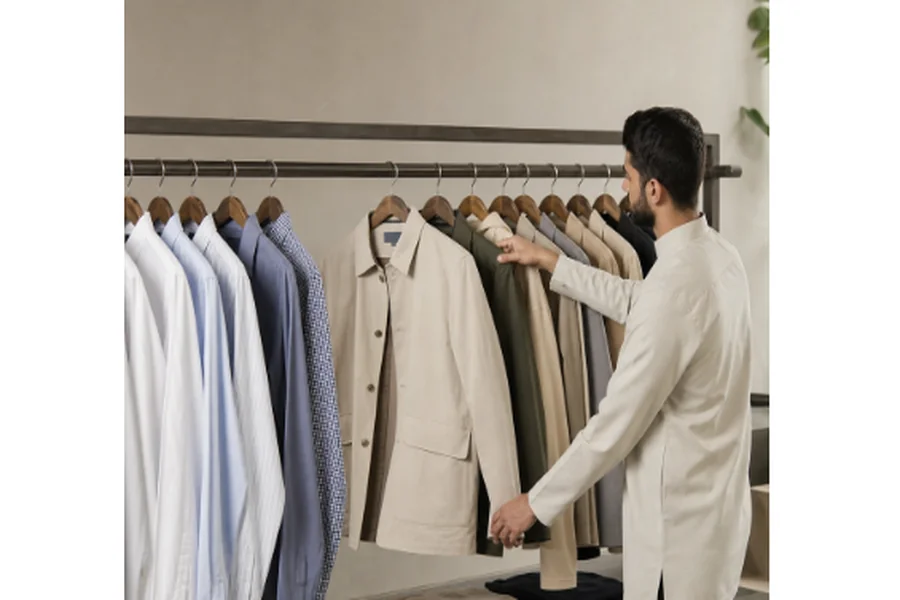
Building a wardrobe that works across multiple occasions without feeling repetitive is one of the most underrated skills in modern dressing. The secret lies not in owning more clothes, but in choosing foundational pieces that interact well with each other. Shirts and outerwear sit at the center of this equation — they define silhouette, communicate style, and carry the weight of your overall look. When these two categories are chosen thoughtfully, everything else falls into place naturally.
Why Shirts Are the True Foundation of a Casual Wardrobe
Most men underestimate how much a well-fitted shirt contributes to their overall appearance. Unlike a jacket or a pair of trousers, a shirt is almost always visible — it frames the face, defines the torso, and sets the tone for whatever is layered over or under it. A poorly fitted shirt can undermine even the most expensive outerwear, while a precisely cut one elevates even the simplest outfit.
The fit conversation around shirts is nuanced. Tucked shirts follow different rules than untucked ones, and understanding those distinctions is essential. According to Primer Magazine’s guide on how an untucked shirt should fit, the hem should fall no lower than the middle of the back pocket on your trousers, and the shirt should taper enough to avoid a boxy, shapeless appearance. These small details make an enormous difference in how polished or sloppy a casual look reads.
Fabric and Construction Matter More Than You Think
Beyond fit, the fabric of a shirt determines its longevity, comfort, and visual quality. Oxford cloth, poplin, chambray, and linen each serve different purposes and suit different climates. A well-constructed shirt will hold its shape after repeated washing, maintain its color, and feel comfortable across a full day of wear. These are not luxury concerns — they are practical ones that affect how often you reach for a piece and how long it stays in your rotation.
Thread count, stitching density, and collar construction are the markers of a shirt built to last. When evaluating any shirt purchase, run your fingers along the seams, check the button attachment, and hold the fabric up to light to assess its weight and weave. These quick checks tell you more than any marketing description ever will.
Statement Outerwear: The Layer That Defines Your Look
Outerwear is where personality enters the wardrobe. While shirts provide the foundation, a jacket or coat is often the first thing people notice and the last thing they remember. Statement outerwear does not need to be loud or trend-driven — it simply needs to be intentional. A piece that has a distinctive silhouette, an interesting texture, or an unexpected detail can transform a basic outfit into something genuinely memorable.
One of the most compelling outerwear options gaining traction in casual style circles is the denim jacket with architectural sleeves. If you want to add visual interest to your layering game, exploring a bell sleeve denim jacket is worth serious consideration. The flared sleeve detail adds a retro-modern dimension to the classic denim silhouette, making it a strong choice for anyone looking to move beyond the standard wardrobe staples without abandoning comfort or wearability.
Pairing Outerwear with Shirts: The Layering Logic
The relationship between a shirt and a jacket is one of proportion and contrast. A slim-cut shirt pairs well with a relaxed jacket, while a more structured shirt benefits from outerwear that echoes its tailored lines. Color contrast is equally important — a light shirt under a dark jacket creates visual depth, while tonal dressing, where shirt and jacket share a similar color family, produces a more sophisticated, intentional look.
Texture contrast is another tool worth using. A smooth cotton shirt under a raw denim jacket creates an interesting interplay of surfaces. A linen shirt beneath a structured wool coat adds warmth without visual heaviness. These combinations are not accidental — they are the result of understanding how different materials interact under light and movement.
Fast Shirt Factory: Where Quality Meets Accessibility
Finding shirts that meet the standards described above — precise fit, quality construction, and versatile design — is not always straightforward. That is where Fast Shirt Factory enters the picture as a reliable resource for men who take their casual wardrobe seriously. The brand focuses on delivering well-constructed shirts that balance everyday wearability with the kind of attention to detail that makes a real difference in how a garment performs and looks over time. Whether you are building a wardrobe from scratch or refining an existing one, having a dependable source for quality shirts simplifies the process considerably.
Building a Cohesive Collection Without Overcomplicating It
A common mistake in wardrobe building is chasing variety at the expense of cohesion. Owning twenty shirts that do not coordinate with each other is far less useful than owning eight that work across multiple combinations. The goal is a collection where each piece can be paired with at least three or four others, creating a matrix of outfits rather than a collection of isolated items.
Start with neutrals — white, light blue, grey, and navy — before introducing patterns or bolder colors. Once your neutral base is established, a single plaid, a subtle stripe, or a muted earth tone can add variety without disrupting the overall harmony of your wardrobe. Apply the same logic to outerwear: one or two statement pieces work best when the rest of your wardrobe is restrained enough to support them.
Maintaining What You Build
A wardrobe is not a static collection — it requires ongoing attention. Shirts should be washed according to their fabric type, stored properly to avoid unnecessary creasing, and inspected regularly for signs of wear. Outerwear benefits from seasonal cleaning and proper hanging to maintain its shape. These habits extend the life of your garments significantly and protect the investment you have made in building a thoughtful wardrobe.
Rotating your pieces regularly also prevents uneven wear. If you reach for the same three shirts every week, the others sit unused while those three deteriorate faster than they should. A deliberate rotation system — even a simple one — ensures that your entire wardrobe gets used and that nothing is neglected until it is too late to save it.
Conclusion: Dress with Intention, Not Volume
The most effective casual wardrobes are not the largest ones — they are the most intentional ones. By prioritizing fit, fabric quality, and thoughtful layering, you can create a wardrobe that serves you well across a wide range of occasions without requiring constant additions or replacements. Shirts and outerwear, chosen carefully and maintained properly, form the backbone of a style that feels effortless because it has been built with effort. That is the difference between dressing and dressing well.