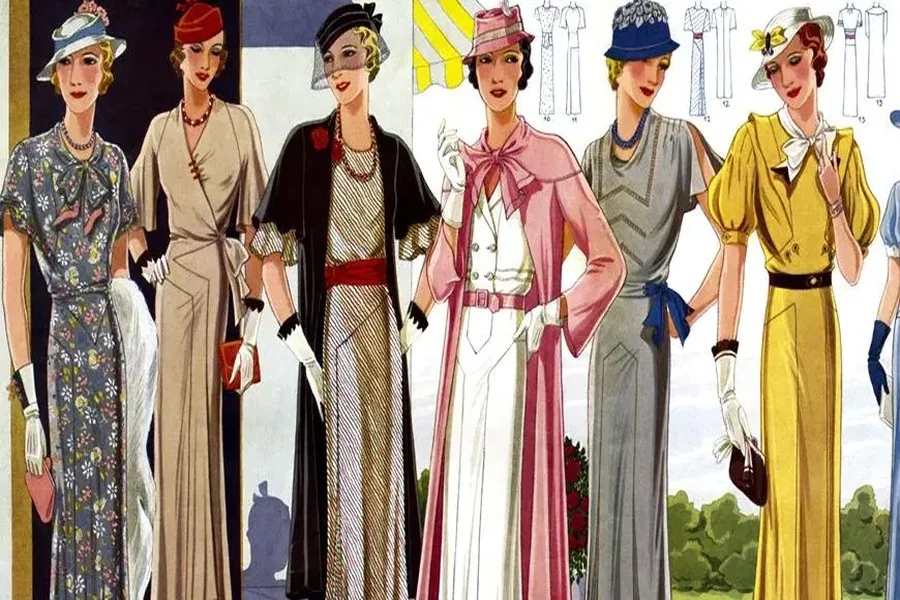
The decade of 1930s was a revolutionary decade in fashion and particularly among the women of the upper classes. A great depression caused great economic transformation however to the richer women of the era fashion was a sign of sophistication and elegance. The fashion of the upper classes in the 1930s women was also an indicator of the hardships of that time and the unwavering wish to be rich and luxurious.
The article will discuss the major aspects of upper class women of the 1930s fashion that included style, shape, and trends that were dominant in the era. An evening dress to a daytime dress, the fashion of this period is still a symbol of its perennial beauty and elegant sophistication.
The Hollywood Effect and the Silver Screen.
Hollywood was significant in influencing the fashion of upper class women of the 1930s. The actresses such as Greta Garbo, Jean Harlow and Katharine Hepburn became fashion icons and shaped the dress code of the rich women on and off screen. These celebrities displayed glitzy, but unrestricted fashionable appearances that were sought after by the elite.
Although the period of 1930s was associated with the Great Depression, Hollywood stars made sure that fashion continues to be a status value. Movies such as The Women and The Thin Man featured lavish gowns, custom suits, and hair that was in the right style and it did not take long before the styles were adopted by the wardrobe of rich ladies around the world.
Silhouettes and Structures: A Change to Elegance.
A change to more elegant and elongated silhouettes was also one of the characteristic elements of the fashion of upper class women of the 1930s. The 1920s had been characterized by the boxy flapper dresses but in the 1930s more feminine and structured lines were brought back.
The waist was more pronounced, and gowns and dresses were focused on curves. The bias cut popularised by a designer, Madeleine Vionnet, was extremely popular. This method enabled the cloth to be able to drape beautifully over the body to form a fluid and sensual silhouette. Dresses were tight-fitting to the body but offered movement which was a great contrast to the rigid and straight cuts of the last decade.
Among upper class women, evening gowns were frequently created to be figure-flattering that is, they highlight the figure of a woman without being overly revealing. Draped fabrics, luxurious materials, and delicate details were peculiar to this style.
Day Wear: Classy but Not Fussy.
The fashion of the upper class women of the 1930s was no exception and was no exception in the daytime. Whereas evening clothes were all glamour, day clothes were more simple yet with luxury attached to them. The upper-class women put on customized suits and dresses of fabrics such as wool, silk, and cotton. These materials were soft and classy, and ideal to use in an afternoon tea or a shopping spree along the boulevard.
The traditional suit had gained popularity, and it was frequently worn in a fitted jacket with a jacket below-the-knee skirt. Such outfits were also accompanied by hats, gloves and pearls. It was also evident that the impact of menswear was evident with women suits incorporating some of its features such as sharp lapels and structured shoulders.
Color and Fabrics: With Style and Elegance.
The fashion colors of the 1930s women of upper classes were luxurious and rich. Emerald green, sapphire blue, and ruby red were the most popular jewel tones, and the paler, more romantic pastel pink and lavender were popular. The rich fabrics used like velvet, silk and satin added to the overall appearance and made it look grand and sophisticated.
Metallics were popular as evening wear. Silver and gold fabrics provided an element of shininess that ensured gowns were ideal in important events and glitzy occasions. These fancy costumes were also detailed with its embellishments such as sequins, beads and lace.
The dress and color style of the 1930s women who belonged to upper classes was more about luxury and sophistication and focused on the type of fabric that would address the wealth and status of the wearer.
Accessories: Glamour in the Details.
The accessories played an significant role in the fashion of upper class women of the 1930s. The details were the difference, bringing even the most basic outfit to something out of the ordinary.
Daytime wear required the use of hats. Women sported wide-brimmed hats decorated with feathers and flowers as well as tight and close-fitting cloches. These hats were a perfect suit to their dress code and provided them with a touch of classiness and sophistication.
Another important accessory was jewelry. The rich used pearls, diamonds and gold. Pearls were hung over the neck in long strands, and small bracelets and rings gave a touch of subtle luxury. Sparkling earrings and brooches were also introduced even to evening wear.
Another accessory used by the upper class women during the 1930s was gloves. They were worn both as a practical and as well as aesthetic point of view contributing some formality and sophistication to any garment.
Evening Wear: Glamour and Drama.
The 1930s upper class evening wear in the women fashion was entirely glamorous. Going to a glamorous ball, a play, or a dinner, the gowns of women were created so that they could be noticeable.
The dresses were quite long, and they were of very expensive materials, like silk, satin, or taffeta. They were dramatic with plunging backs, sweetheart necklines, and rich bead work. Such designers as Jean Patou, Elsa Schiaparelli and Madeleine Vionnet were reputable in producing beautiful and useful evening gowns.
The impact of Hollywood actresses was also of great significance to the evening wear. The high fashion was inspired by the glamorous dresses of such movie stars as Joan Crawford and Greta Garbo, whose appearance on the screen became the image of high fashion.
Hair and Beauty: Traditional Glamour.
The proper hairstyle and beauty regimen were incomplete without any outfit. The style of upper class women of the 1930s did not simply pertain to their dress, but the entire appearance. Hairstyles during that period were smooth, sharp and well made.
The most popular hairstyles included short bob, soft waves and finger waves. It was very common that women spent hours in order to make the ideal waves or curls, the shiny look was also contributed by the sleek finish of these hair styles. Women would also choose more fancy updos when attending evening events.
There was subtle glamorous makeup. It was a symbol of red lips and pale skin with clear brows as the beauty standard. The eyebrows were made into gentle arches and the lashes were long and darkened with mascara. This was aimed at being perfect and sophisticated, to fit in the general beauty of the time.
The impact of Designers and trendy styles.
The 1930s was the turning point in fashion history, and the fashion of the upper class women in the 1930s was shaped by some of the most recognized designers of that era. The Parisian fashion houses such as Chanel, Vionnet, and Schiaparelli were ahead in designing designs which would be luxurious yet practical. The fashion industry was transformed by these designers who brought about useful and beautiful styles.
Their impact is visible in the contemporary fashion to date. The glamorous lines, expensive material and classic shapes of the 1930s still have a glimpse on designers. Women of the time, particularly the high-society ones, sported these styles gracefully and so a style that has become a legend has been created.
Conclusion
A fashion of the upper class women in 1930s was about elegance, sophistication and beauty that was eternal. The fashions of this period still create the image of luxury and glamour. The clothing was created to be noticed, whether it was the custom-made suits or the sparkly evening gowns, and to display the position of a woman.
The look was topped off with accessories, expensive fabrics, and ideal hairstyles. Although the Great Depression altered the world in numerous aspects, fashion still provided a way out to a beautiful and refined world. The fashion of the upper class women in the 1930s has remained a source of inspiration to the contemporary designers and fashion enthusiasts worldwide.
FAQs
What was the most popular fabric in upper class 1930s women’s fashion?
Silk, satin, and velvet were the most popular fabrics for evening wear, while wool and cotton were commonly used for daywear.
What accessories were common in upper class 1930s fashion?
Hats, gloves, pearls, and diamond jewelry were essential accessories for the fashionable woman of the 1930s.
Who were the top designers influencing 1930s women’s fashion?
Designers like Madeleine Vionnet, Elsa Schiaparelli, and Coco Chanel had a huge influence on the fashion of the 1930s.
How did Hollywood influence fashion in the 1930s?
Hollywood actresses, like Greta Garbo and Joan Crawford, were style icons who influenced what women wore, especially in evening wear.
What was the most iconic hairstyle of the 1930s?
The finger wave hairstyle was one of the most iconic looks of the 1930s, popularized by actresses in films and high society.
